Starting a small business in South Africa: decisions before spending money
Before starting a small business in South Africa, decide what you sell, who needs it, how you will deliver it and what one sale costs you. Then check the legal structure and requirements that fit your actual work. A certificate and a polished logo cannot answer those questions for you.
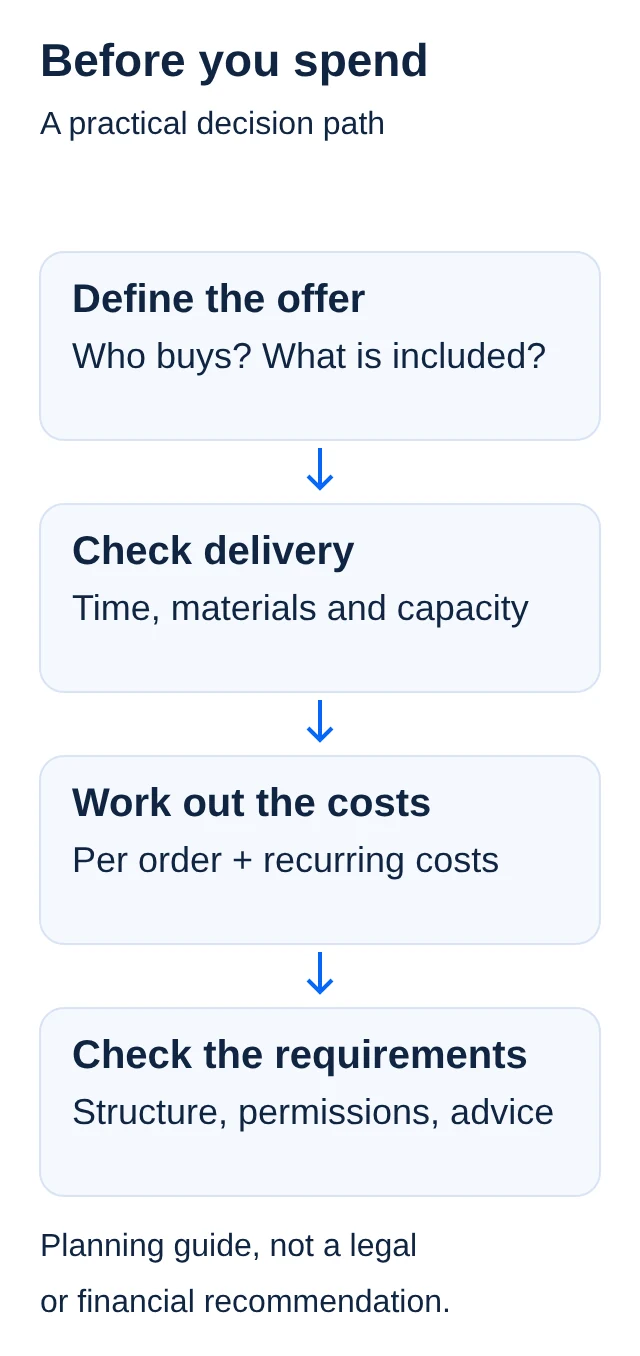
This article is a preparation worksheet, not legal, tax or investment advice. The examples below are made up to explain a decision. They are not Fimneo customer stories or promises of earnings.
Starting a small business: what will customers buy?
Start with one offer you can explain without a long introduction. Write the customer, the job and the boundary in a sentence. For example: "I offer clothing alterations by appointment, with the price and collection date agreed after inspecting the garment." That is easier to evaluate than "a fashion solutions business".
Under that sentence, list what is included and excluded. If collection, delivery, materials or additional revisions cost extra, make that visible before the customer agrees. You do not need a large catalogue to make an offer clear. You need enough detail for someone to know whether it solves their problem.
Ask a few potential customers how they currently handle the task and what makes it difficult. Do not count a friendly compliment as an order. Record specific questions, objections and requests. These can help you improve the offer before buying tools to deliver something nobody has asked for.
Can you deliver one order reliably?
Walk through an order from the first enquiry to completion. Where will the work happen? Which materials, skills and permissions does it need? How will a customer approve changes? What will you do if a supplier is late or you cannot complete the job?
Use a small trial of your process before accepting more work than you can handle. This need not mean giving away your work. It can mean checking your equipment, timing a sample task or agreeing a limited paid scope with a customer who understands it. Do not advertise a turnaround time until you have a reasonable basis for it.
Write down your capacity in practical units: appointments per day, garments per week or orders you can pack before the courier collection. Capacity is about delivery, not how many enquiries you can receive. Leave space for questions, corrections and administration.
What does one sale actually cost?
Make a simple cost sheet for your offer. Include materials, packaging, delivery you pay, payment-provider charges and the time needed to deliver the work. List recurring costs separately, such as hosting, rent or software. Do not treat the full selling price as money available to spend personally.
Here is an illustrative calculation, not a recommended price: an order sells for R300, while materials, packaging and delivery cost R180. That leaves R120 before your labour, payment fees, recurring expenses and tax. Calling the R120 "profit" at this stage would hide costs you have not yet included.
Ask what changes if an order needs rework or a refund. Keep a reserve plan rather than spending every receipt immediately. If you need help working out tax or accounting treatment, ask a suitable professional. A basic worksheet is useful preparation, but it does not replace advice for your situation.
Do you need a company now?
Do not choose a legal structure because a package makes it sound like the only route. SARS describes both legal-entity businesses and businesses run as sole proprietorships or partnerships. Its guidance explains that a sole proprietor is taxed on profits in an individual capacity, while partners are taxed on their respective shares.
These structures have different consequences. Ownership, liability, tax and future funding are questions to work through before deciding. This article does not recommend one structure for every reader. Check the official guidance and seek advice where your circumstances are unclear.
If you decide on a private company, use the company-registration preparation article before submitting anything. Registration creates administration to maintain, rather than finishing all compliance. CIPC's annual-return service says companies and close corporations must file annual returns each year. Those filings are different from SARS tax returns.
For a newly registered company, do not leave beneficial-ownership filing until an annual review. CIPC says newly incorporated entities must file the information within 10 business days of incorporation. Add the applicable filing and record-keeping steps to your starting plan and confirm them with CIPC.
Which requirements belong to your kind of work?
Make a requirements list based on what the business actually does. Food preparation, regulated professional work and other activities can have requirements beyond company registration. Ask the relevant authority about your activity and location instead of assuming a general registration bundle covers everything.
Also ask your intended customer what documents it needs. A supplier application, a bank account, a tax status check and a company certificate are different things. Buying all possible documents before you know the requirement can waste time and money.
Keep a record of the authority or organisation you consulted, the question you asked, its answer and the date. Requirements and fees can change. A forwarded screenshot with no source or date is a poor basis for a commitment.
Decide what to buy first and what can wait
Prioritise spending that makes the offer deliverable, safe and understandable. Compare each purchase with the task it solves. If a basic enquiry page is enough for your current service, do not assume you need a full online store. If you cannot yet quote accurately, another marketing tool will not fix that gap.
Use the website launch checklist when an online home is the next useful step. Before accepting payments, work through the online-payment preparation article. Both are decisions about a working process, not simply choosing a design or adding a button.
End your planning with three short lists: what must be settled before the first order, what can wait until demand is clearer, and what needs advice. Assign a person and a next action to each open item. Review those lists after real enquiries and completed work. You can change a plan without pretending the early assumptions were facts.
Official sources
Checked for this article on 13 November 2026. Practical worksheets above are editorial suggestions, not official registration requirements.