Company registration in South Africa: prepare before applying
Company registration in South Africa: start by deciding who owns the business, which structure fits and who will be a director. Prepare accurate details, check current CIPC fees and plan the separate tax-access steps that follow. A company number does not finish every business requirement.
Start with the business, not the certificate
A company registration is an administrative step, not proof that your business has customers or that every licence and tax requirement is covered. Before you pay anyone, write down what you plan to sell, who will buy it and how you will deliver it. A simple sentence is enough: “I repair household appliances for customers in my area, with quotes agreed before the visit.”
Then list the decisions you still need to make. Who owns the business? Who will be a director? Does the work need a separate permit or professional approval? If you are unsure about the right legal structure, get advice for your situation before registering. This article explains preparation for a standard private company. It is not legal or tax advice.
1. Does a private company fit your plan?
CIPC describes a private company, usually written as (Pty) Ltd, as privately owned and not able to offer shares to the general public. Its August 2026 registration guide says it needs at least one director. That does not mean every small business needs a private company.
Write down the owners and proposed directors, and make sure everyone understands the decision. Do not add someone simply because an application needs a name. If ownership, responsibilities or the company structure are disputed, settle that before you start filling in a registration form.
2. Company registration in South Africa: what does it cost?
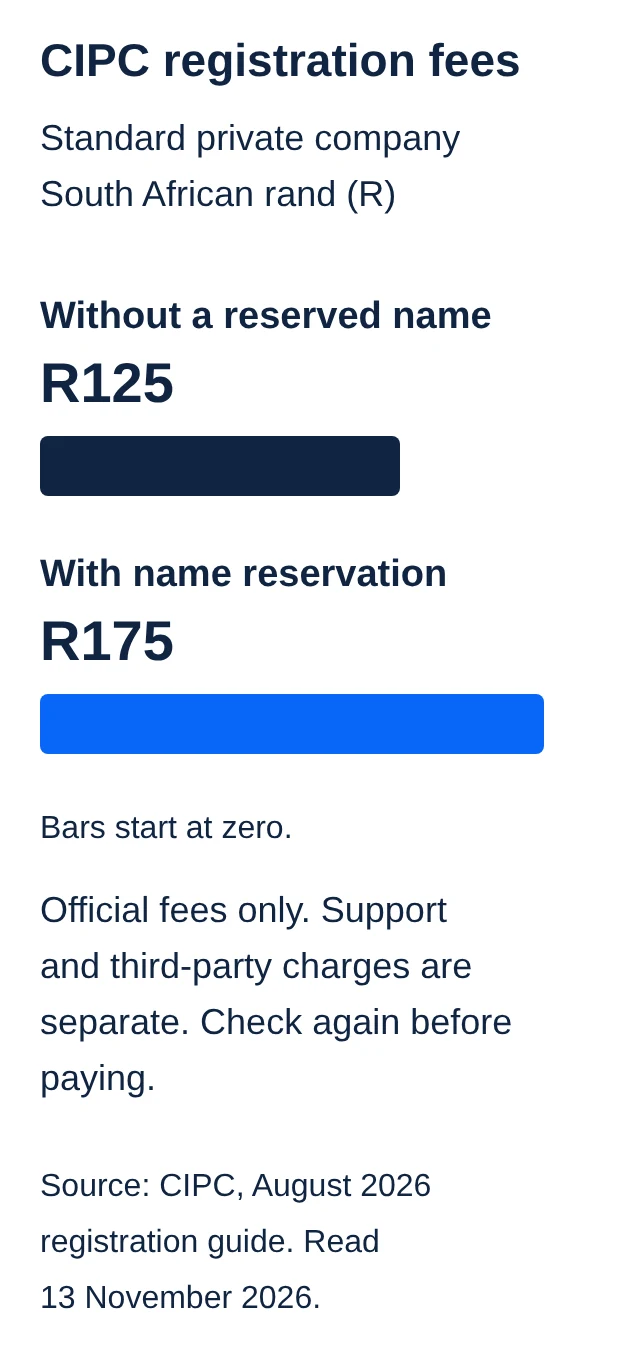
CIPC lists a standard private-company registration at R125 without a reserved name, or R175 including name reservation. Online name reservation on its own costs R50 per transaction. These are the authority fees checked for this article on 13 November 2026, not a service provider’s price. Check the official fee page again before you pay.
Choosing a name, reserving a company name, registering a domain and protecting a trademark are different decisions. Do not treat a name idea or an available website address as legal clearance. If your name is central to the business, investigate the relevant trademark route before spending heavily on signs, packaging or advertising.
If someone quotes you a registration package, ask for two lines: the CIPC charge and their own support charge. Ask what happens if a name is rejected or information is incomplete. A low headline price is not useful if you cannot see what it covers.
3. What information should you prepare?
CIPC’s registration guide describes the process as accessing a customer profile, choosing the company type and name option, capturing company, director and incorporator information, completing director verification, and paying the prescribed fee. It specifically says to use each director’s own accurate cellphone number and email address.
Before starting, have the proposed company information and the relevant people’s correct details ready. Follow the document and identity checks shown by the official registration channel you use. Requirements can differ by route and circumstances, so do not rely on an old forwarded checklist.
Keep your registration account and contact details under your control. A helper should explain what they will submit and give you a chance to check it. Do not send a password, identity document or verification code in a public comment or an ordinary project brief. Agree a suitable secure process before sensitive information is collected.
4. What should you review before submission?
Check spellings, contact information, the name option and the people included. Read the final fee and the application details on screen rather than assuming they match an earlier quote. If someone is helping you, approve the actual information that will be submitted, not a vague promise to “sort everything out”.
Keep the submission reference and payment evidence. When the authority supplies registration documents, save a copy somewhere you can find again. A folder named with the company name and registration date is more useful than a document lost in a long message thread.
Do not promise a customer or tender deadline based only on a registration estimate. Verification, missing information or authority processing can affect the next step.
Plan the first company compliance steps
CIPC says newly incorporated entities must file beneficial-ownership information within 10 business days of incorporation. Later changes also need timely updates. Its annual-return process requires up-to-date beneficial-ownership information and the applicable financial filing. Confirm the entity-specific requirements and keep the filing evidence; an annual tax return does not replace these steps.
5. What happens with SARS after registration?
SARS says that, once a company is registered with CIPC, an income-tax reference number is automatically generated. The taxpayer must then register on eFiling to transact electronically. That is why “getting a tax number” and having working access to the company’s tax affairs are not the same thing.
Confirm the appropriate representative and access steps through SARS. Do not assume the company is tax compliant because a number exists. This article does not assess your tax status or say whether VAT, PAYE or another registration applies to you. Ask SARS or a suitable registered tax professional when your circumstances need advice.
6. Registration is not tender readiness
A company certificate does not complete CSD registration or produce a B-BBEE affidavit. Those have their own information and eligibility checks. If you plan to supply an organisation, ask it which documents it actually requires before buying a bundle you may not need.
For CSD, use the official registration process and prepare accurate supplier, contact, commodity and delivery-area information. Relevant bank, tax and director information may be checked against other institutions. B-BBEE documentation depends on the business and applicable rules; do not sign a declaration you have not checked.
A short checklist to keep
Before starting: write the business purpose, settle the proposed structure and people, choose the name route, check the current official fee, and confirm which registration channel you will use.
Before submitting: review every detail, confirm who owns the login, approve any helper’s scope, and keep sensitive information out of public forms and casual notes.
After registration: save the authority documents and references, confirm SARS account access, and list the separate compliance or supplier steps your actual work needs. Registration is the start of an administration routine, not the end of it.
Related preparation
Start with the business decisions article, then use the first-month administration routine to plan the work after registration. Fimneo's registration-requirements page sets out its administrative support scope; official and third-party charges are separate.